How Source Code Access Cut openEHR CDR Query Times to O(1)

Judging openEHR CDR performance is tough. You can stress-test by inserting millions of compositions and benchmarking queries. But even if it feels fast, how do you know it can’t be faster?
When I finished my openEHR CDR, it was hitting 15ms per committed composition. Humanly fast—but I wanted to test the limits.
Because ArcEHR gives customers full source code access—and uses an open-source database written in the same language—I ran the IntelliJ IDEA profiler across the entire stack.
The Profiler's Trail
- The flame graph pointed to high execution time inside CreateCompositionHandler:
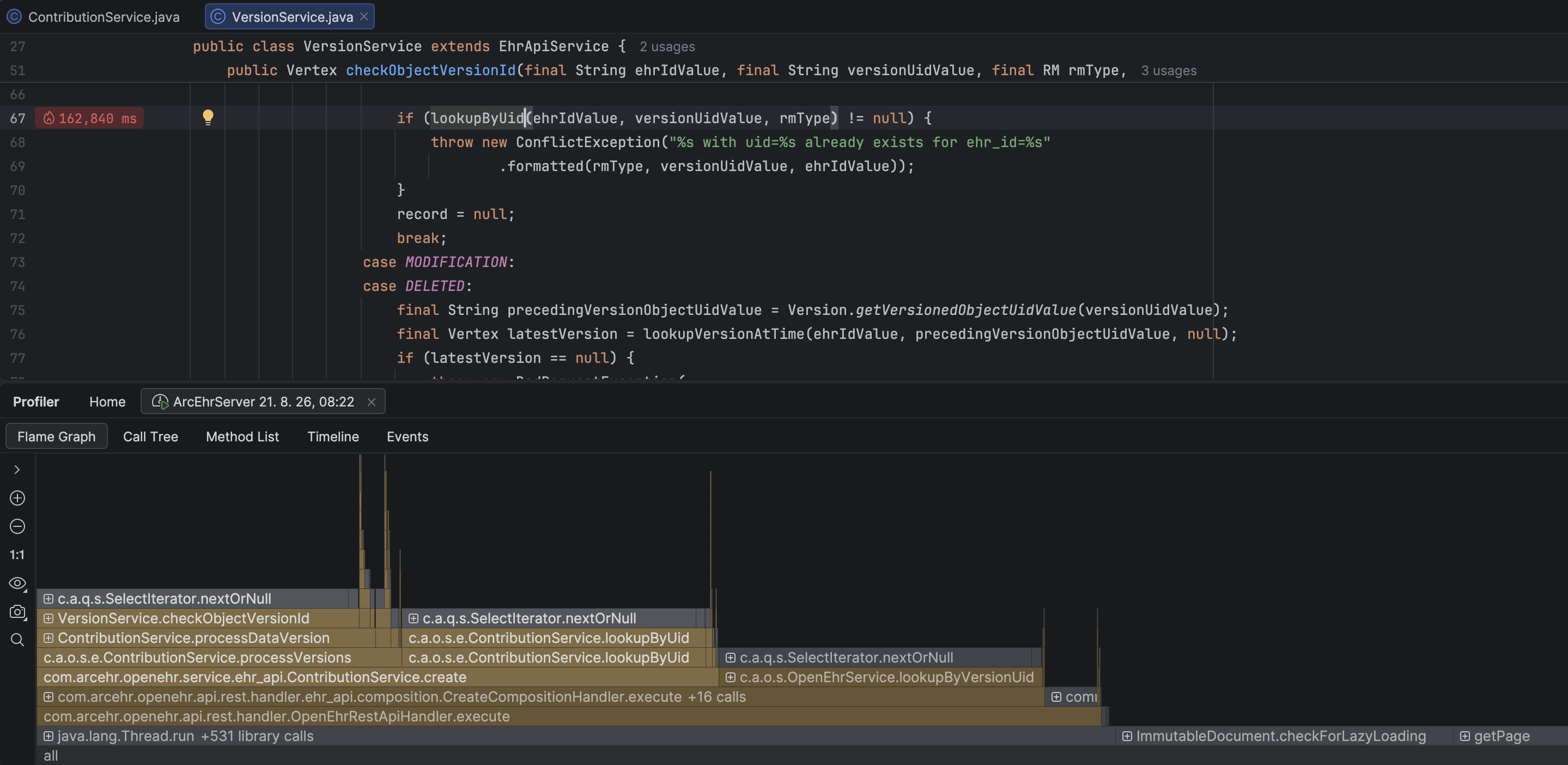
- Drill-down revealed the culprit: lookupByUid(), an innocent check to see if a UID already exists.
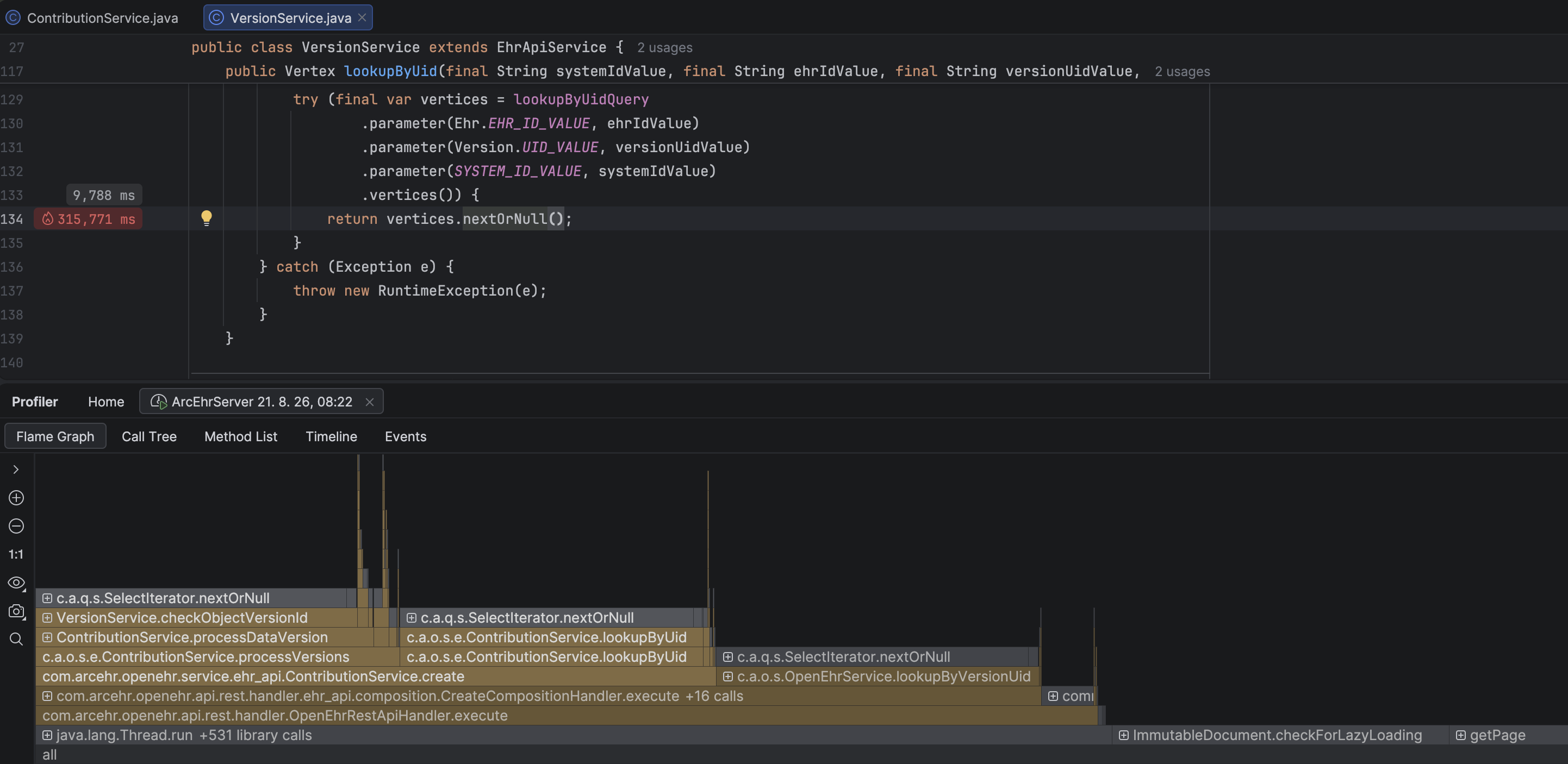
- Following the query into the database engine exposed why the SQL query was lagging.
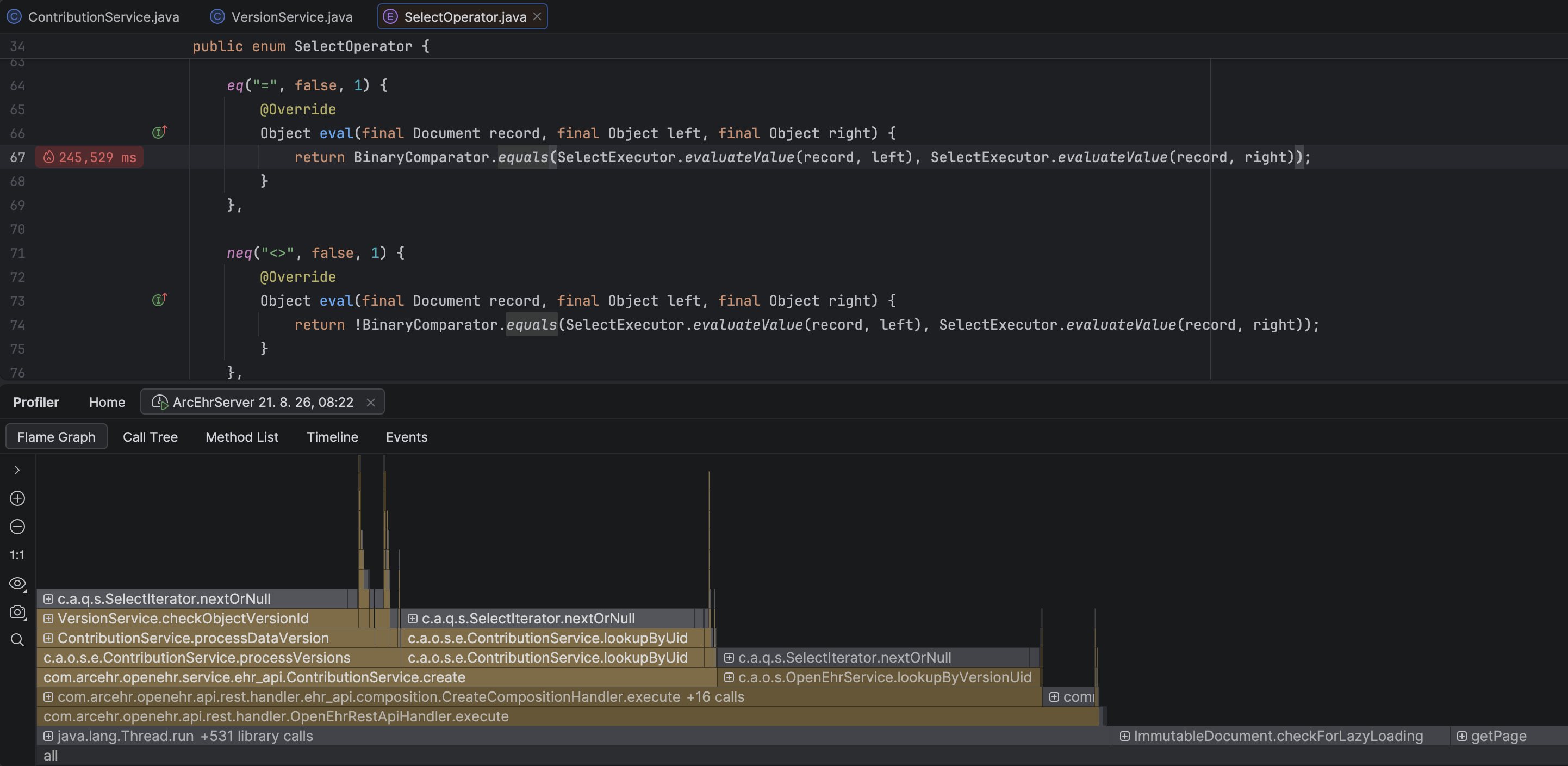
The Fix
The UID lookup index was using an LSM Tree. Switching to a Hash Index brought lookup time down to O(1)—ensuring lookups stay instant no matter how large the CDR grows.
Conclusion
Why source code matters: Without visibility into the full stack, a bottleneck like this remains invisible. Source code access turns black-box performance limits into solvable engineering problems.
Have you encountered performance bottlenecks or scaling issues with your openEHR CDR? How are you profiling your health data architecture?